
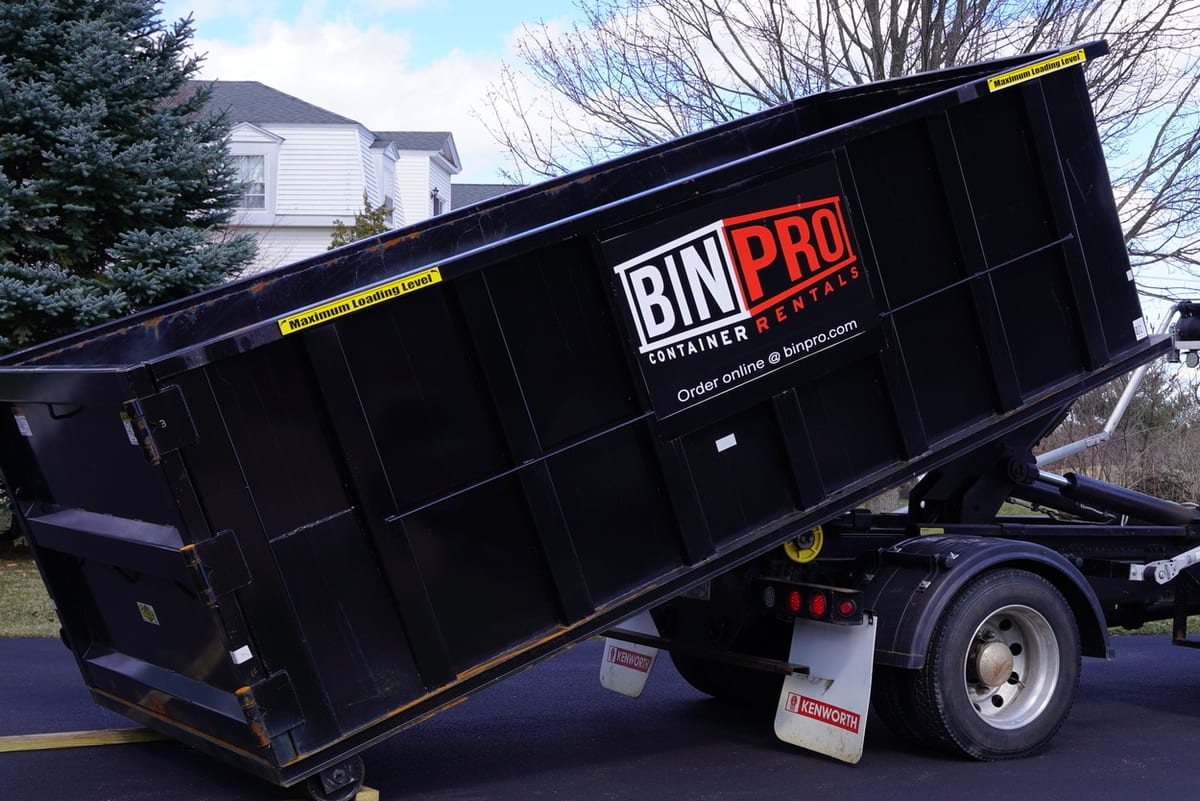
Pick the right size
Three hook-lift roll-off sizes, each rated to hold up to 5 tons. Not sure which you need? Call us and we'll help you choose the most efficient bin for your project.

15 Cubic Yard Dumpster
Fits a standard single driveway with room to open the rear door, and the walls are low enough to load over the side rather than lifting everything up and in. This is the size most people underestimate - a full garage or a stripped bathroom genuinely does fit.
Rule of thumbRoughly one room, one garage bay, or a single-bath strip-out. If you are clearing a whole floor, look at the 20.
- +Garage cleanouts
- +Bathroom remodels
- +Small furniture removal
- +Small-medium projects

20 Cubic Yard Dumpster
The one most renovations end up needing. It swallows a full kitchen including cabinets and countertop, or a decent deck tear-off, without pushing you into a second haul. Still sits on a normal residential driveway.
Rule of thumbA full kitchen, a mid-sized deck, or two to three rooms of clear-out. The default choice when you are between sizes.
- +Attic cleanouts
- +Carpet removal
- +Landscaping projects
- +Larger projects

30 Cubic Yard Dumpster
Built for volume rather than weight. Gut jobs, roof tear-offs and land clearing all produce more material than people plan for, and this is the size that keeps it to one container. It needs a longer, clear run to place.
Rule of thumbA whole-house gut, a full roof tear-off, or land clearing. Needs about 22 feet of clear space plus room for the truck.
- +Renovations
- +Roofing tear-offs
- +Attic cleanouts
- +Carpet removal
- +Landscaping projects
How to choose between them
Three sizes covers almost everything, so the decision is usually quick. These are the things that actually decide it.
Talk it through: (603) 601-0800Volume decides, weight limits
Every size is rated to the same 5 tons, so a bigger bin does not mean more weight allowance — it means more room. Dense material is what catches people out: concrete, brick, tile, asphalt shingles and waterlogged debris reach 5 tons long before the container looks full. For those loads the 15 is often the right call even on a big job.
One size up beats a second haul
When you are genuinely between two sizes, the larger one is almost always the cheaper answer, because a second delivery means a second trip, a second placement and a second wait. We will tell you plainly when that is the case — and we will tell you when it is not.
Check the space before the size
A 30 needs roughly 22 feet of clear, level ground plus room for the truck to line up and lower it. Tight downtown lots, shared drives and beach-area streets often rule it out regardless of the job, which is why compact placements tend to run a 15 or a 20.
Describe the job, not the size
The fastest way to get this right is to tell us the rooms, the square footage or the material rather than guessing at a number. Two minutes on the phone beats a wrong container on your driveway, and there is no upsell in it for us if the smaller bin does the job.
What You Can Load
- +Asphalt, brick, concrete
- +Asphalt shingles
- +Bulky items
- +Cardboard
- +Clean gypsum wallboard
- +Wires
- +Glass
- +Metals
- +Leaves / yard waste
- +Plastics
- +Wood waste
- +Tarps
- +Insulation
- +Scrap tires
What We Can't Take
- ×Paints
- ×Asbestos
- ×Liquids
- ×Municipal solid waste (basic trash / garbage)
Questions about a specific material? Call(603) 601-0800.
Not sure which size?
Call us and we'll help you pick the most efficient dumpster for your project, so you never pay for space you don't need.